In the bustling world of baking and cooking, where grand feasts often steal the spotlight, it’s easy to overlook the unsung heroes of our culinary arsenal. Among these, the humble quarter baking sheet stands out as an indispensable, compact powerhouse. Don’t let its size fool you; this little workhorse is a game-changer, perfectly suited for the modern home cook and baker who appreciates efficiency, versatility, and culinary precision without the bulk. It’s an underestimated kitchen essential that can dramatically elevate your everyday cooking, making it easier and more enjoyable.
|
Our Picks for the Best Baking Sheet in 2026
As an Amazon Associate I earn from qualifying purchases.
|
||
| Num | Product | Action |
|---|---|---|
| 1 | Commercial Quality Baking Sheet Pan Set, Natural Aluminum Cookie Sheet, Umite Chef Warp Resistant Baker\'s Half Sheet Pan, Large Thick Cookie Tray Pans for Baking, Roasting(2 Pack, 18X13In) |

|
| 2 | NutriChef 3-Piece Nonstick Kitchen Oven Baking Pans - Premium & Stylish Non-Stick Steel, Commercial Grade Restaurant Quality Metal Bakeware with Red Silicone Handles - Easy to Clean, NCSBS3S |
|
| 3 | HONGBAKE Baking Sheet Pan Set of 3, Cookie Sheets for Oven, Nonstick Half/Quarter/Jelly Roll Pans with Diamond Texture Pattern, 0.8mm Thick Heavy Duty Cookie Tray, Champagne Gold |
|
| 4 | GoodCook Everyday Nonstick Carbon Steel Baking Sheet Set, 3 Pack – Small 13” x 9”, Medium 15” x 10”, Large 17” x 11” – Carbon Steel Cooking Pans, Cookie Sheet Bakeware Set |
|
| 5 | Amazon Basics Ceramic Nonstick Baking Sheets & Cooling Rack Set, Non-Toxic, Half Sheet Size, 2-Pack, Gray |
|
| 6 | Caraway Non-Stick Ceramic Medium Baking Sheet - Naturally Slick Ceramic Coating - Non-Toxic, PTFE & PFOA Free - Perfect for Baking, Roasting, and More - Medium (15\" x 10\") - Gray |
|
| 7 | Caraway Non-Stick Ceramic Large Baking Sheet Duo - Naturally Slick Ceramic Coating - Non-Toxic, PTFE & PFOA Free - Perfect for Baking, Roasting, and More - Large (18\" x 13\") - White |
|
| 8 | BRONYPRO Non Stick Ceramic Baking Sheet Pan Set of 3, Non Toxic Cookie Sheets (PFOA/PTFE Free), Aluminized Steel Oven Trays with Silicone Handles, Rust-Resistant, Warp-Resistant to 500°F, Light Gray |
|
| 9 | Caraway Non-Stick Ceramic Baking Sheet Duo - Naturally Slick Ceramic Coating - Non-Toxic, PTFE & PFOA Free - 18 x 13\" Large & 15 x 10\" Medium - Slate |
|
| 10 | GoodCook Everyday Nonstick Carbon Steel Baking Sheet Set, 3 Pack – Small 13” x 9”, Medium 15” x 10”, Large 17” x 11” – Carbon Steel Cooking Pans, Cookie Sheet Bakeware Set |
|
What Exactly is a Quarter Baking Sheet?
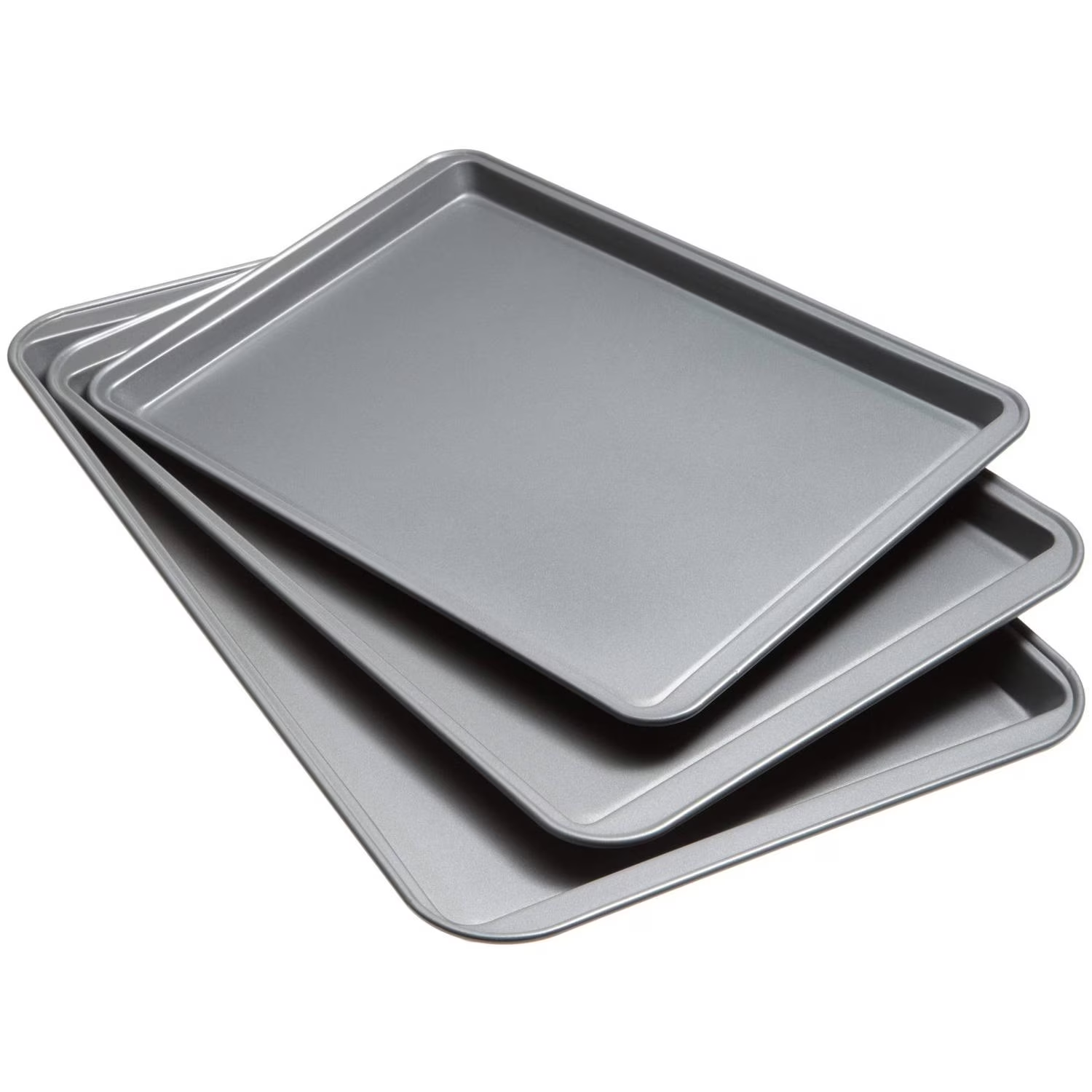
A quarter baking sheet, often simply called a quarter sheet pan, is a rectangular metal pan with a shallow, approximately 1-inch rim on all four sides. While a full sheet pan (18×26 inches) is typically found in commercial kitchens and a half sheet pan (18×13 inches) is the most common size for home ovens, the quarter baking sheet measures around 13×9 inches or 9.5×13 inches. This smaller dimension makes it an ideal fit for most standard home ovens, and two can often comfortably sit side-by-side. The presence of a rim around all edges is a key differentiator from traditional cookie sheets, which often have only one or two raised sides, making the quarter sheet pan far more versatile for containing liquids, preventing spills, and allowing for various cooking methods.
The Unsung Versatility: Why You Need a Quarter Baking Sheet
The true magic of the quarter baking sheet lies in its incredible adaptability, making it far more than just a pan for tiny treats.
Small-Batch Baking & Roasting
For anyone who loves fresh-baked goods but doesn’t need dozens, the quarter baking sheet is a godsend. It’s the perfect canvas for baking a small batch of cookies, a few individual brownies, or a couple of delicate pastries. Beyond sweets, it excels at roasting: think perfectly caramelized vegetables for a single serving or two, a succulent chicken breast, or a flaky salmon fillet. Its size ensures that food doesn’t get lost in a cavernous pan, promoting even cooking and browning.
Efficient Meal Prep
Ever found yourself with a handful of chopped veggies waiting to be roasted, or a small amount of nuts needing toasting? The quarter baking sheet handles these tasks with ease. It’s fantastic for “mise en place,” keeping your prepped ingredients organized and accessible during cooking. You can also use it to quickly cool cooked grains for a salad, or to flash-freeze delicate items like berries, pre-portioned cookie dough balls, or individual dumplings before transferring them to freezer bags. This prevents them from sticking together, preserving their quality.
Beyond the Oven
Its utility extends far beyond just baking and roasting. Need to reheat a slice of pizza or some leftover fries? The quarter baking sheet offers ample space without monopolizing your oven. It can double as a handy serving tray for appetizers, snacks for movie night, or individual TV dinners, keeping everything contained and tidy. In the fridge, it’s brilliant for containing potential spills from marinating meats or leaky containers, saving you from scrubbing down shelves.
Space-Saving & Convenience
One of the most compelling reasons to embrace the quarter baking sheet is its compact footprint. It fits effortlessly into smaller ovens, including toaster ovens and countertop models, making it a go-to for quick meals or baking in a limited space. When cleanup time comes, its dimensions are just right for a standard sink, making washing up less of a chore. And when it comes to storage, these pans stack neatly, minimizing clutter in your cupboards.
“The quarter baking sheet is the Swiss Army knife of bakeware for the home kitchen,” says Amelia Davies, a renowned culinary consultant and baking enthusiast. “Its compact size doesn’t limit its capabilities; rather, it unlocks a whole new level of efficiency for everyday cooking, from flash-freezing to perfect single-serve meals.”
Choosing Your Perfect Quarter Baking Sheet
Navigating the options for bakeware can be daunting, but understanding a few key factors will help you select a quarter baking sheet that will serve you for years to come.
Material Matters
The material of your baking sheet significantly impacts its performance and durability.
- Aluminum: This is the most common and often recommended material for good reason. Aluminum is an excellent heat conductor, heating up quickly and distributing heat evenly across its surface, which is crucial for uniform baking and browning. It’s lightweight, durable, and naturally rust-resistant. Many professional bakers swear by uncoated aluminum pans.
- Aluminized Steel: Offering the best of both worlds, aluminized steel combines the robust durability of steel with the superior heat conductivity of aluminum. These pans are often heavier gauge and less prone to warping, frequently featuring a non-stick silicone coating for easy food release and cleanup.
- Stainless Steel: Stainless steel pans are incredibly sturdy, resistant to rust and staining, and can withstand very high temperatures. They are non-reactive, meaning they won’t interact with acidic ingredients. While durable and often dishwasher-safe, stainless steel doesn’t conduct heat as efficiently or evenly as aluminum and may not be naturally nonstick, sometimes requiring more effort to prevent sticking.
Gauge (Thickness)
The gauge, or thickness, of the metal is vital. A lower gauge number indicates a thicker metal. Thicker, heavier-gauge pans (ideally between 10- and 18-gauge) are more durable, less likely to warp under high heat, and provide more consistent heat distribution, leading to better baking results. Thinner pans can heat too quickly, leading to burnt spots and warping, especially with repeated use at high temperatures.
Non-stick Coatings
Many quarter baking sheets come with a non-stick coating. While these make food release and cleanup incredibly easy, it’s important to weigh the pros and cons. Non-stick coatings can wear off over time, especially with metal utensils or harsh scrubbing, and generally have a lower maximum oven-safe temperature compared to uncoated pans. For most heavy-duty roasting and high-heat tasks, an uncoated pan is often preferred for its longevity and versatility.
Tips and Tricks for Quarter Baking Sheet Mastery
To get the most out of your quarter baking sheet, keep these pointers in mind:
- Embrace Liners: For effortless cleanup and to protect your pan’s finish, always use parchment paper or a silicone baking mat, especially when roasting oily foods or baking items prone to sticking.
- Don’t Overcrowd: Give your food space! Overcrowding the pan reduces air circulation, leading to steaming instead of roasting or baking, resulting in soggy rather than crispy or beautifully browned results. If you’re cooking for more than two, consider using two quarter sheets or a larger pan.
- Mind the Temperature: Due to their efficient heat conduction, especially with aluminum pans, you might find yourself needing to slightly reduce cooking times or oven temperatures for certain recipes to prevent over-baking or burning. Always keep an eye on your food.
- Gentle Cleaning for Longevity: Hand washing with warm, soapy water is generally recommended for all baking sheets, especially those with non-stick coatings, to preserve their finish and extend their lifespan. Avoid abrasive scouring pads or metal utensils, which can scratch surfaces. For tough stains, a paste of baking soda and a little water can work wonders.
Common Quarter Baking Sheet Blunders (And How to Avoid Them)
Even with such a versatile tool, a few common missteps can hinder your cooking adventures:
- Overcrowding the Pan: As mentioned, this is a prime culprit for uneven cooking and soggy outcomes. If you have too much food for one quarter sheet, use two or embrace the beauty of batch cooking.
- Neglecting Care Instructions: Ignoring manufacturer guidelines, particularly for non-stick surfaces, can drastically shorten your pan’s life. Harsh scrubbing or metal utensils can damage the coating, rendering it ineffective.
- Using a Dark Non-stick Pan for Delicate Bakes: Dark-colored non-stick pans absorb more heat, which can lead to faster browning or even burning on the bottom of delicate items like cookies or light-colored cakes. For these, a lighter-colored, uncoated aluminum pan or using parchment paper is a better choice.
- Ignoring Warping: A warped pan can lead to uneven cooking. If your pan warps, it might be too thin (high gauge) or subjected to extreme, rapid temperature changes. Invest in a heavier gauge pan to prevent this.
Recipe Ideas & Inspiration
Get ready to put your quarter baking sheet to work with these simple ideas:
- Roasted Root Vegetables: Toss carrots, parsnips, and sweet potatoes with olive oil, herbs, salt, and pepper. Roast until tender and caramelized.
- Sheet Pan Chicken & Veggies for One: A single chicken breast alongside broccoli florets and cherry tomatoes, seasoned and roasted.
- Crispy Kale Chips: Tear kale into bite-sized pieces, toss with a tiny bit of olive oil and salt, and bake until crisp.
- Personalized Nachos: Layer tortilla chips with cheese and your favorite toppings for a quick, single-serving snack.
- Small Batch Chocolate Chip Cookies: Bake just a few cookies from frozen dough for an instant treat.
Frequently Asked Questions
What is the standard size of a quarter baking sheet?
A quarter baking sheet typically measures approximately 13 inches by 9 inches (or 9.5 inches by 13 inches) with a 1-inch rim around all sides. This size is half of a standard half-sheet pan and fits comfortably in most home ovens.
Can I use a quarter baking sheet in a toaster oven?
Yes, absolutely! The quarter baking sheet is an ideal size for toaster ovens, making it perfect for preparing smaller meals, reheating leftovers, or baking single servings without heating up your main oven.
What is the best material for a quarter baking sheet?
Uncoated aluminum is widely considered the best material for its excellent heat conductivity, even heating, and durability. Aluminized steel is also a fantastic option, offering good heat distribution with added strength, often with a non-stick coating.
How do I prevent my quarter baking sheet from warping?
To prevent warping, choose a heavier-gauge (thicker) pan, as these are more robust. Avoid subjecting your pan to extreme, sudden temperature changes, such as placing a hot pan directly into cold water.
Is a quarter baking sheet the same as a cookie sheet?
No, they are different. A quarter baking sheet has a rim around all four sides (typically 1 inch high), making it versatile for containing liquids and various cooking tasks. A traditional cookie sheet usually has only one or two raised edges, designed primarily for sliding cookies off easily.
Embrace the Potential
The quarter baking sheet is more than just a piece of bakeware; it’s a testament to how intelligent design can transform your culinary experience. From whipping up a personal batch of cookies to perfectly roasting vegetables for one, its compact size and unwavering versatility make it an indispensable tool for every home kitchen. So, if you haven’t yet discovered the joy and efficiency this small but mighty pan brings, it’s time to welcome it into your kitchen. Embrace its potential, experiment with new recipes, and let this little hero empower your passion for cooking and baking.